

Goededag!
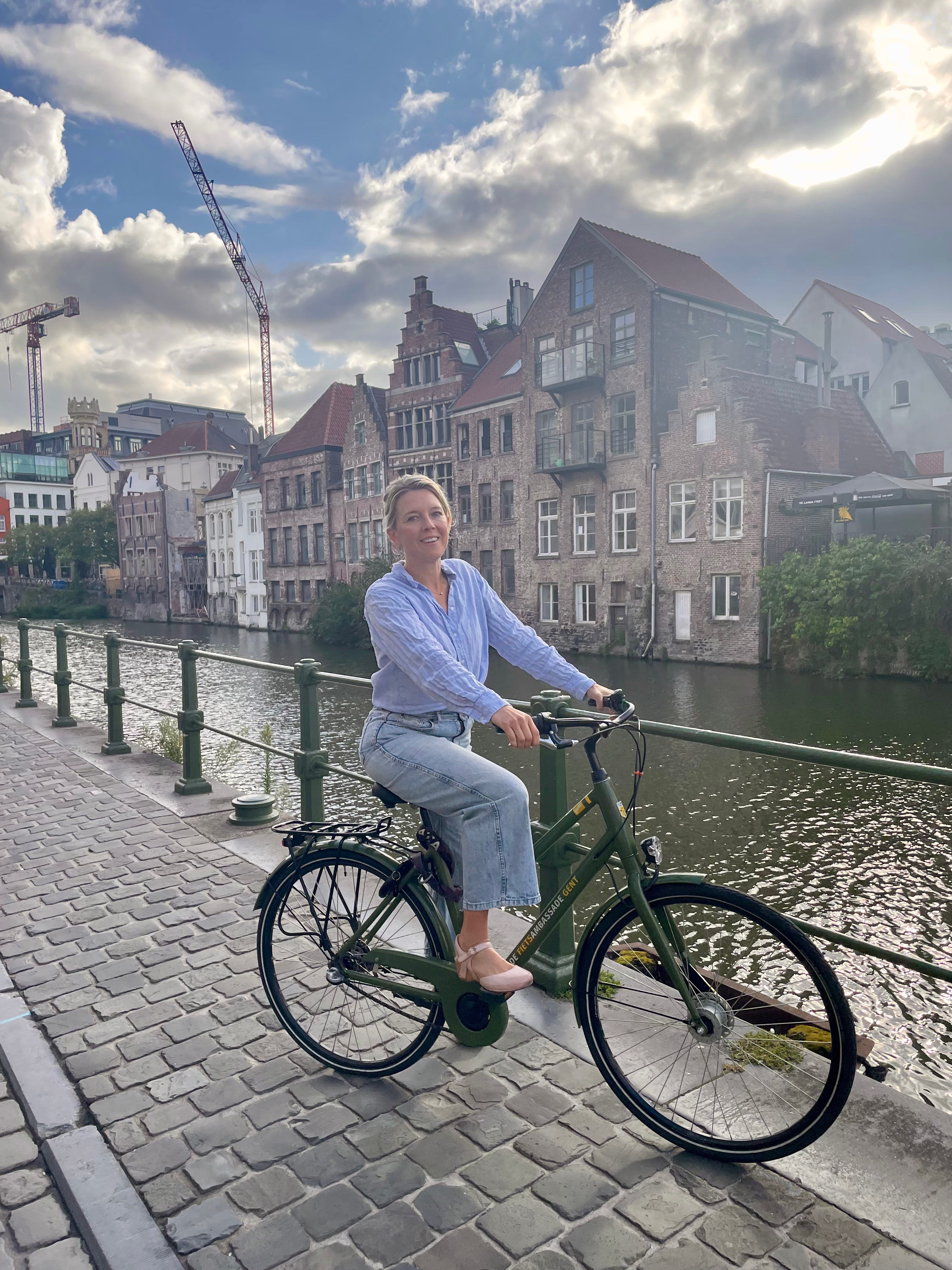
Greetings from Ghent, Belgium, where I am working as a Fulbright Scholar to learn how an old European city recently said: enough with the car accidents! We’re putting people first. In this post, I’ll provide some background as to why I—a fiction writer—moved from Charleston, South Carolina to the land of waffles and Dutch bikes to study transportation. And I’ll share what I plan to do with my grant while living here.
My quest for sensible street design started back in 2013, when my husband and I purchased a home at the intersection of Ashley Avenue and Huger Street, which, as you Charlestonians know, is just south of Hampton Park and close to The Citadel. Not too long after, I noticed car wrecks happening with alarming frequency. There were smaller fender benders, but also far more serious ones, too, involving tow trucks and ambulances. I had wondered, is this just a particularly bad intersection? Or, is this normal?
The accidents kept happening. I’d be in my kitchen about to add oat milk to my coffee and then—boom!—I’d hear the familiar, ominous crunch of metal. I’d step outside to see stunned drivers, shattered glass, the fronts of cars smashed so they looked like accordions. At night, over the hum of my box fan, I’d hear a crunch or a loud pop, and know immediately it was another wreck. One morning, I woke to see a car had entirely flipped upside down directly across the street from my front door. This is crazy, I had thought. Someone needs to do something!
A couple of years—and many wrecks—later, I became a mother. Soon, I knew, my children would walk these streets. I was my nightmare that their precious bodies would collide with a vehicle going even the speed limit, let alone at the speeds fast enough to flip a car. That’s when the instincts kicked in. Damnit, I thought, if I want to protect my children, I’ll have to be that person who does something.
I began my activism like most people do: I started with my local neighborhood association. My neighbors shared my grievances and agreed that something should be done, but, as I eventually learned and will explain later in this Substack, making changes to Charleston’s transportation system is so extremely complicated and exhausting that it’s really difficult for community groups (or anyone!) to be effective.
I tried other avenues, asking police officers to monitor the intersection (they did and ticketed reckless drivers, but then soon left). I met with surveyors in bright green vests on hot summer days, hoping that if we could provide data on the speeding cars, we could at least get a speed hump. (Again, I’ll explain later why it’s more likely you’ll see a unicorn than a speed hump on a State-owned road.) I invited a city engineer to my house. I recall a bit of our conversation back then. When watching cars blow past stop lights from the shade of my porch, she said something to the effect of “wow, it is really bad here.”
I felt validated. And we did get started with plans for changes to the two intersections where Congress and Huger cross Ashely Avenue. Despite my best efforts, those plans, started about ten years ago, are still in the works.
In the meantime, the city has added signs. At first, I was stoked. Progress! But since then I’ve learned that signs actually don’t do much at all to influence driver behavior (if you want more info on signs, read this easy-to-follow article). Essentially, signs do a better job at placating concerned citizens than actually making the roads safer. So, in all practical measures, the intersections near my home have essentially remained the same. The drivers continued to fly past my house, and the wrecks continued to happen.
Why was real change taking so long in Charleston?
One things I did know was that I had to keep trying. Maybe, I thought, I can show people what I see, then they’ll hop into action. I began taking photos of wrecks I happened to witness. Here is just a sampling:
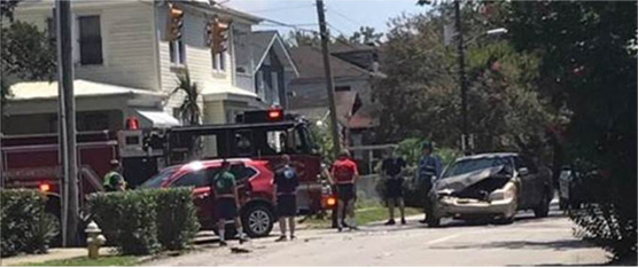
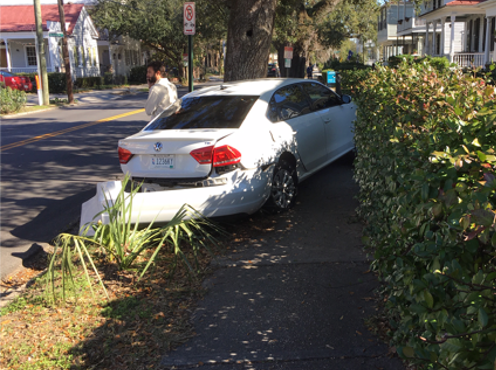
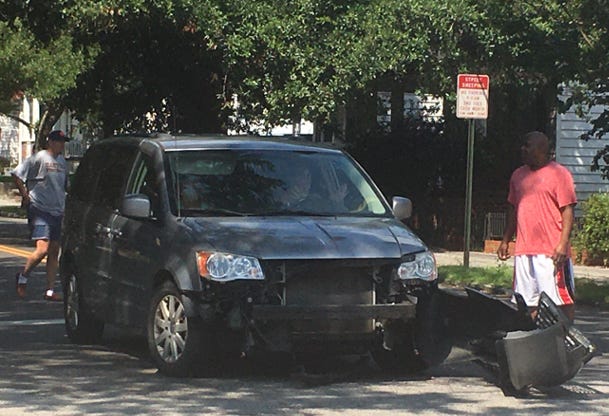
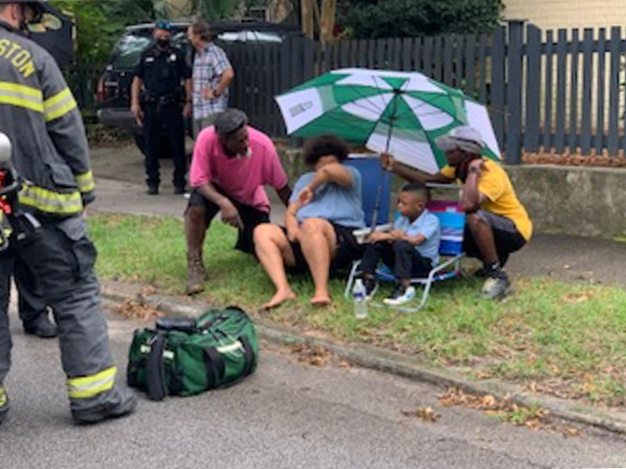
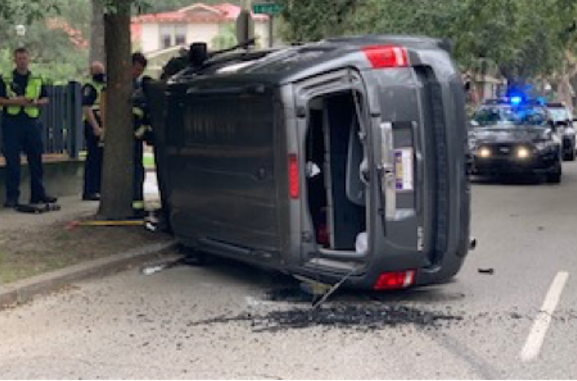
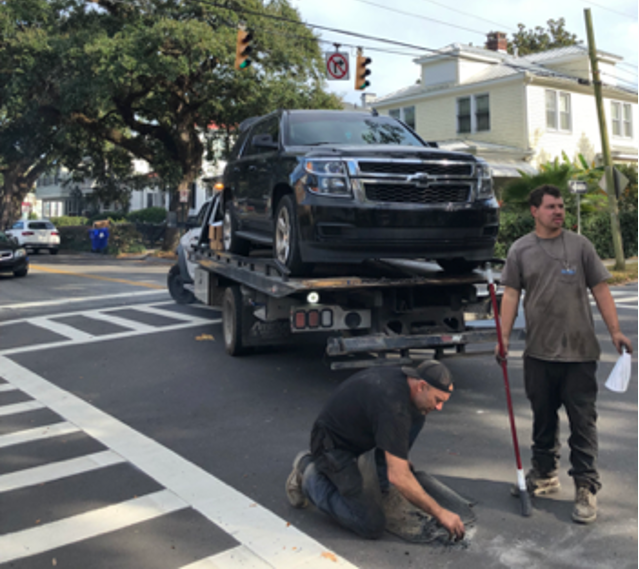
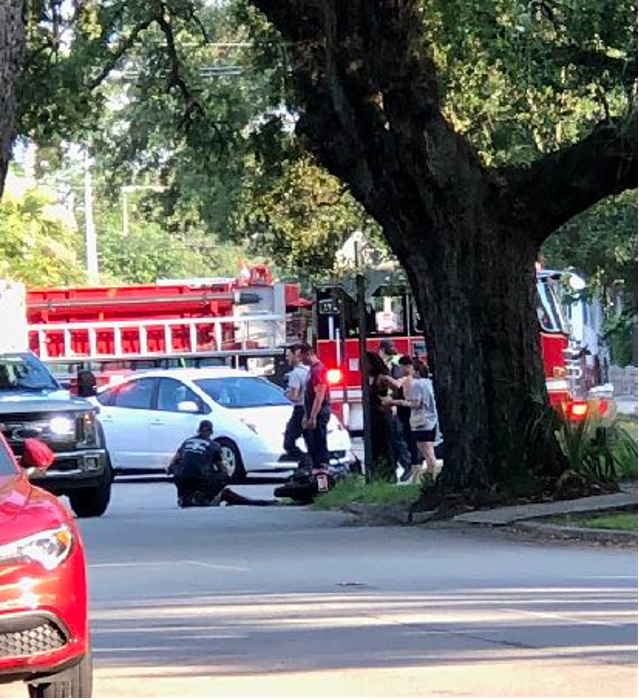
I shared these images with neighbors and city officials. Everyone agreed they’re alarming. And everyone agreed something must be done. And they all cheered me on. I continued my push to improve the two intersections at Ashley and Congress and Ashley and Huger, sending dozens of emails, following up with phone calls, and taking a crash course in transportation engineering. I also enthusiastically joined Charleston’s Bicycling & Pedestrian Advisory Committee, hoping to make streets all over my city as safe as I’d hope to make Ashley Avenue.
But then Covid happened. The committee disbanded. The planned improvements to the intersection at Congress were shelved. Subsequently, when the city emerged from the pandemic, the funding that was secured for the intersection was no longer enough to pay for the improvements. At some point later, during a Zoom review for the Huger intersection, the engineer had accidentally posted old plans to the shared screen, and somehow that meant the review of the designs would be tabled for another time. And on and on…
I was defeated. Ten years of trying, all that effort, and still no significant changes to my corner.
Here’s what I’ve learned in my time advocating for safer streets: the engineers, city officials, and residents all want safer streets. It’s just that change is hard because we’re part of a complicated system that, as it seems to me, prioritizes the flow of cars through a neighborhood over the safety, wellbeing, and happiness of the people who live there.
Why do cars get unchecked authority? And why is it so difficult and demoralizing to make our streets safe for people outside of cars? Is there a better way? And what can I do about it?
To answer those questions, I’m living in Ghent, Belgium. This spectacular medieval town was a lot like Charleston ten years ago; it, too, had given cars given free reign. People here used to crowd the skinny sidewalks in deference to the vehicle. They tolerated the noise and the traffic and the danger just as most of us do in Charleston without much thought. That is, until they decided: Enough.
I am so excited to share with you what it’s like to live in a city that invites cars to be the guest, not the boss. It’s truly a lovely everyday, every moment experience.
So, how did the people of Ghent transform their city center into one that puts people first? And, more importantly to me is—what was that narrative for change? That’s what I’m here to discover. And that’s what I want to bring with me back home (and ultimately as a novel).
Why fiction? The tangle of Charleston’s bureaucracy is a huge hurdle to overcome, but I think our cultural attitude toward cars might be the bigger obstacle. Stories open up the imagination. They introduce us to new possibilities.
I hope you’ll continue to read my posts and perhaps share them with others in our community. If we can imagine a different way of moving through our city, I believe that together, united, we can create a safer, more joyful experience in Charleston for everyone.
Excellent write up! Out of curiosity, can you explain the intersection and the road ownerships? Looks like a signalized intersection in a relatively residential part of Charleston. I used to live in Savannah, and when I visited Charleston I remember walking around Hampton Park. Just from scrolling around on Google Street View, I'm guessing the two lane one way on Ashley Ave was one of the main design issues? I'm excited to follow your work!